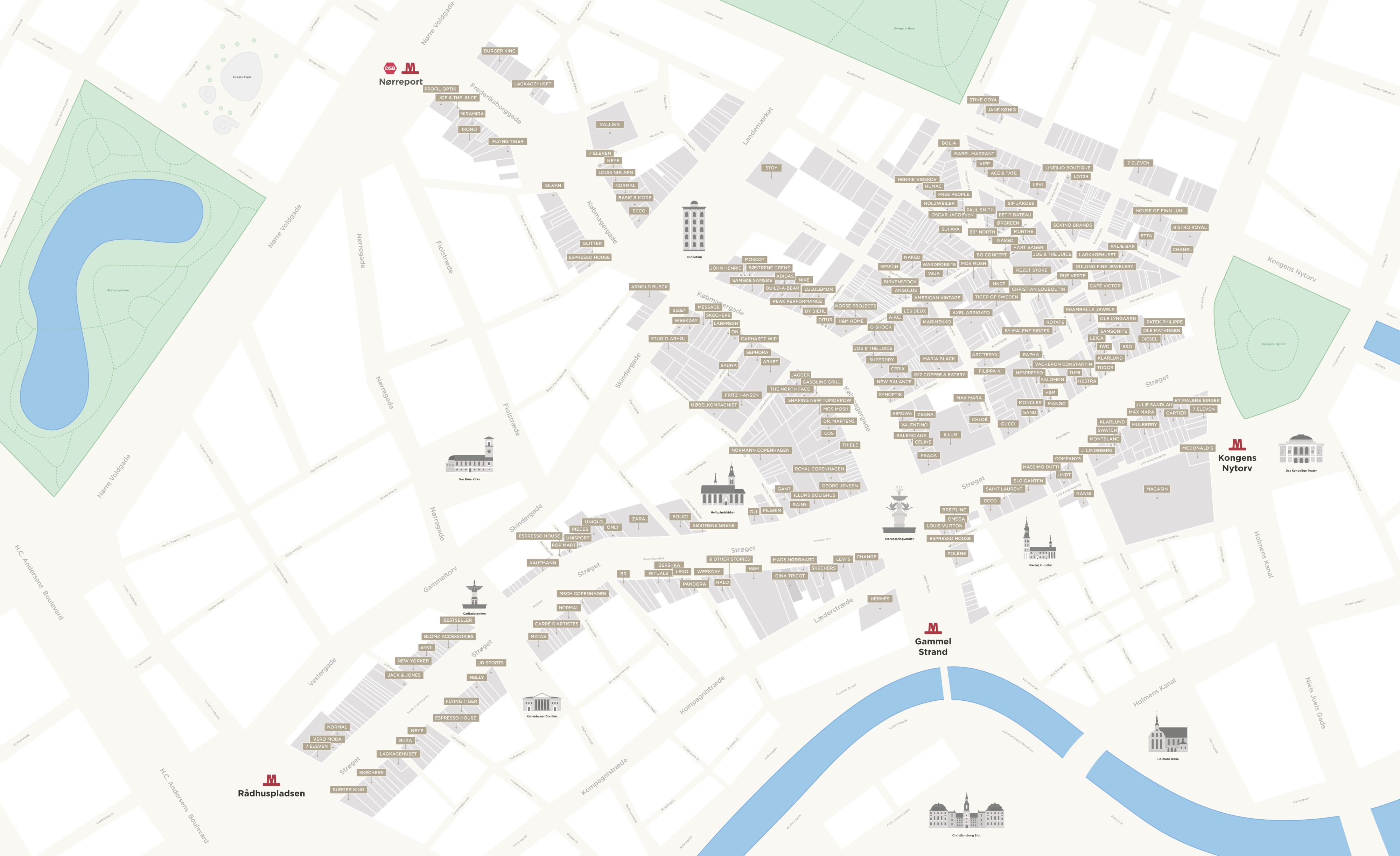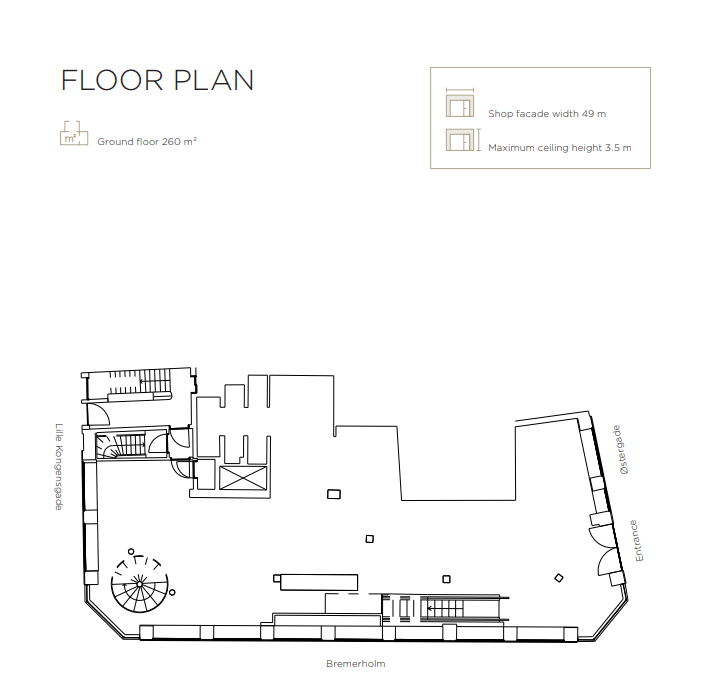
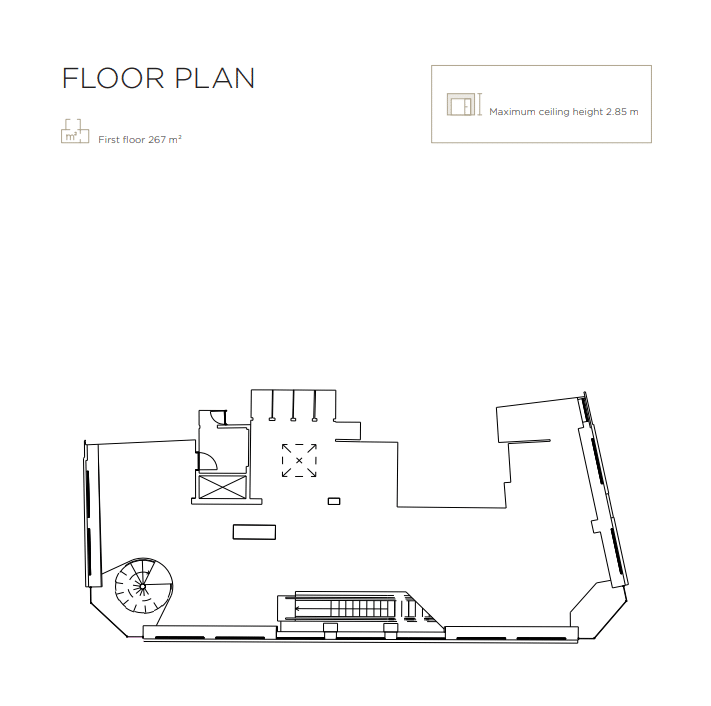
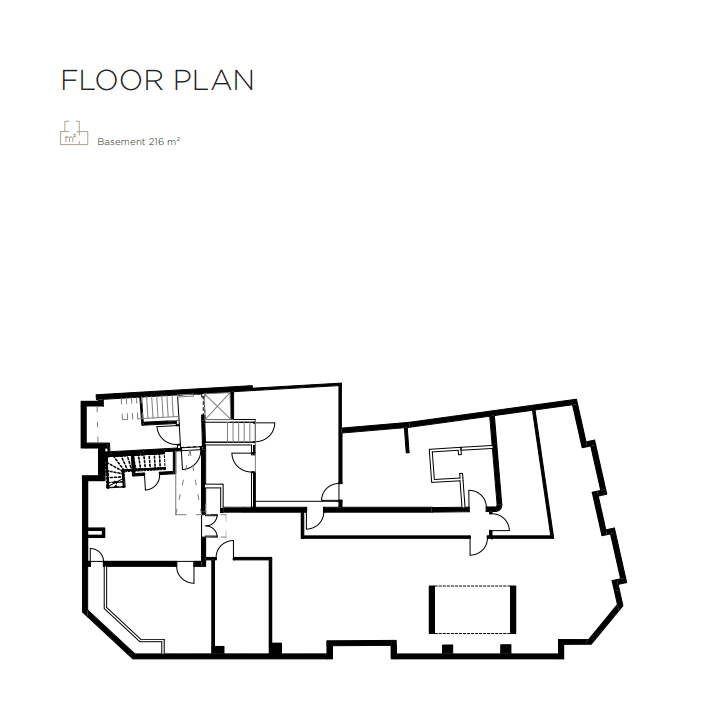
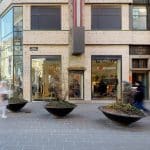
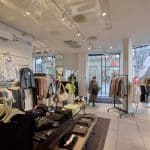
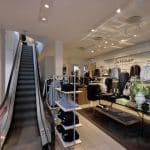
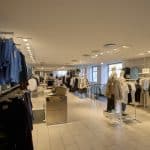
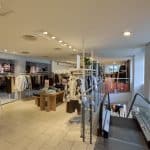
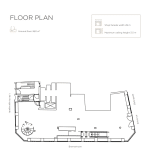
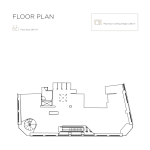
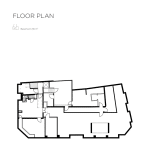
The retail unit in A.C. Bang’s House extends from the basement to the first floor and comprises a sales area of more than 500 sqm, in addition to storage and staff facilities as well as secondary areas on all floors. Few other properties on the Strøget stand out in the same way as A.C. Bang’s House. The retail unit alone features an incredible 14 display windows at street level and a further 13 on the first floor, with the building presenting itself perfectly symmetric towards what is commonly referred to as Magasin Square next to the historical department store, Magasin Du Nord.
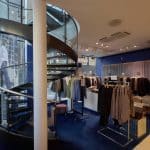
All floors included in the retail lease are accessible through internal staircases within the premises as well as the building’s elevator, which serves all levels, hence internal logistic is secured and fulfil expectations of today. The sales area is open featuring a remarkable ceiling height as well as a welcoming layout interrupted only by a few load carrying structures that do not, however, impede customer flow within the store.
Architect Bent Helweg-Møller (1883-1956) constructed this functionalist building between 1932 and 1934 for the fur company A.C. Bang, from which the property derives its name, A.C. Bang’s House. The building is an early and distinct example of Danish functionalism. It stands apart from its older neighboring buildings through its simpler, modern expression, characterized by clean lines, large façade sections, and an emphasis on function rather than ornamentation. The property features façades along Lille Kongensgade, Bremerholm, and Østergade.
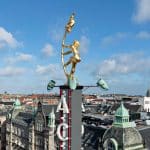
Atop the building stands the brass sculpture “The Girl with the Fur Animal,” which has crowned the end of the meter-high light installation since the building’s completion nearly 100 years ago. The leaving tenant has occupied the shop for decades, which is why the retail unit in this distinctive property is rarely offered on the open market. This therefore represents a unique opportunity to open the doors to an entirely new universe capable of captivating customers at one of the busiest locations on Strøget.
Recently, an award-winning restoration of the building has been performed, incl. the completion of the following work:
Facade and structure
• The original travertine façade has been carefully repaired rather than replaced, and the characteristic ceramic cornice bands have been reinstated. Solar panels are integrated into the travertine cladding on the gable walls as a discreet, sustainable addition.
• Windows from the 1980s have been replaced with new, custom-designed units featuring slim frames inspired by the original steel windows and fitted with low-energy glazing to improve thermal performance. External awnings have been added to support solar shading and indoor comfort.
Insulation and building envelope
• The existing building envelope has been upgraded through additional insulation on street façades and gables, significantly improving energy performance. The new rooftop floors feature a highly insulated envelope in line with modern standards.
Technical installations
• To improve energy efficiency and indoor climate, the building has been equipped with district cooling, heating, and ventilation systems with heat recovery. Tenants have access to individually controlled ventilation systems.
• Additional technical measures include low-temperature heating systems and on-site solar power generation, contributing to reduced energy consumption.
Sustainability and certification
• The project is designed to achieve DGNB certification, combining long-lasting materials with energy-efficient technical solutions to ensure reduced environmental impact and a long service life.